
Automation eliminates the need to hire more staff
Effective IT is essential for any organization. But this is especially true for a foundation, which needs to manage the funds entrusted to it as efficiently as possible. Since 2010, the Friedehorst Foundation in Bremen has gradually automated nearly all aspects of its IT service management—from software deployment to the service catalog. As a result, it manages to operate with a small IT team despite having 1,300 PCs.
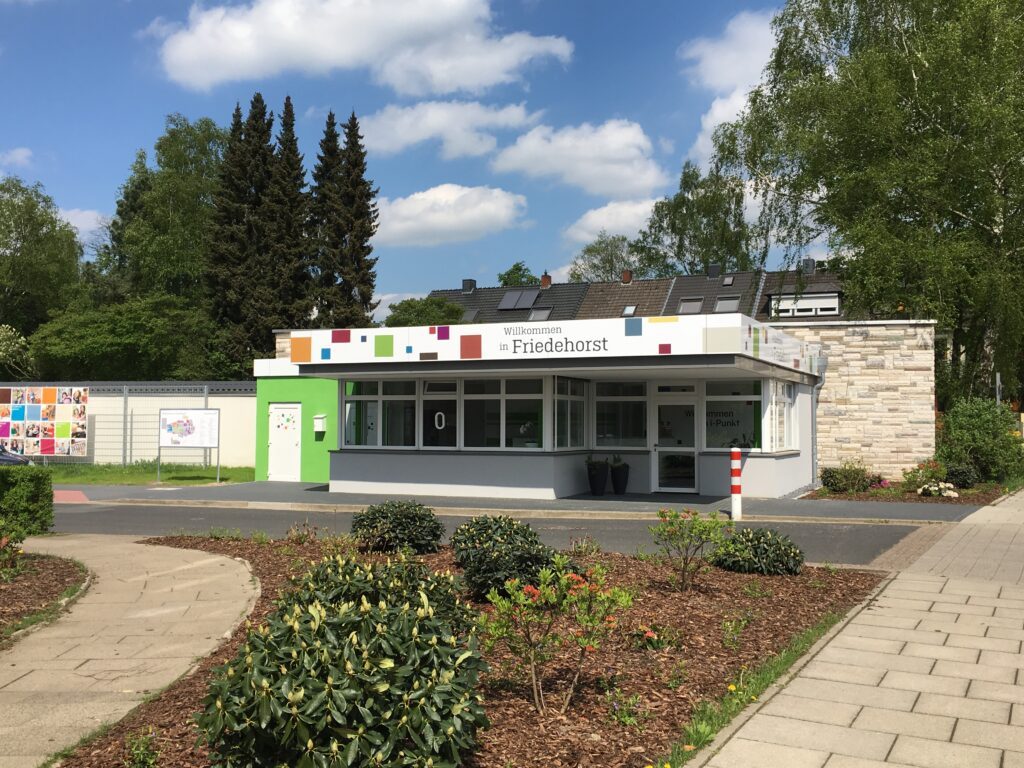
Anyone who steps onto the foundation’s grounds feels as though they’ve left the hectic business world far behind. It’s green and quiet here—one might even call it serene. But appearances can be deceiving. Behind this façade, Friedehorst is a highly active organization.
Not only a retirement home and nursing home, but also a neurological rehabilitation center, a residential facility and employment provider for people with intellectual disabilities, as well as a vocational training center for integration and participation in the workforce. Approximately 1,400 employees care for about 2,000 people, 700 of whom live there permanently. For them and the institutions of the vocational support center, around 1,300 PCs with various applications are in use.
The seven-member IT team is responsible for ensuring that all IT equipment functions properly. It lays the groundwork for reports, expert opinions, and billing, and has even begun developing a digital patient record system. “We actually need a lot more staff,” says IT Director Klaus Krause, “but you know how it is in nursing and rehabilitation: society isn’t willing to invest adequately here. And if we can’t hire enough people, we just have to automate as much as possible and streamline our processes.”
Equal partners
Krause began the automation process eight years ago. At that time, the team decided to stop deploying software manually. With a maximum capacity of 20 PCs per day, reinstalling all PCs would ultimately keep one employee busy for about three months. That made purchasing software deployment software worthwhile. In the selection process, Empirum prevailed over Matrix42 ’s Unified Endpoint Management (UEM). Around the same time, Friedehorst IT introduced a ticketing system that now encompasses not only incident management but also change management. Gradually, the team acquired virtually the entire service management suite—known to veterans of the Matrix42 ecosystem as the “Service Store.”
For support, Friedehorst selected Consulting4IT, a system integrator with process expertise and a certified Matrix42 Platinum Partner based in Waldbronn near Karlsruhe. Although Consulting4IT has an office in Hamburg, its headquarters—and thus the majority of its consultants—are located about 600 kilometers from Bremen.
But that didn’t bother the IT manager much. In information technology, distance doesn’t really matter, he explains: “We met at a trade show, ran a pilot project, and hit it off right away. With a manufacturer, you’re usually just one of many customers; with a partner, you’re on equal footing.” An employee from Consulting4IT stops by in Bremen once or twice a year. And for smaller “tweaks,” Krause has his well-trained and motivated team on site.
Shared knowledge is double the knowledge
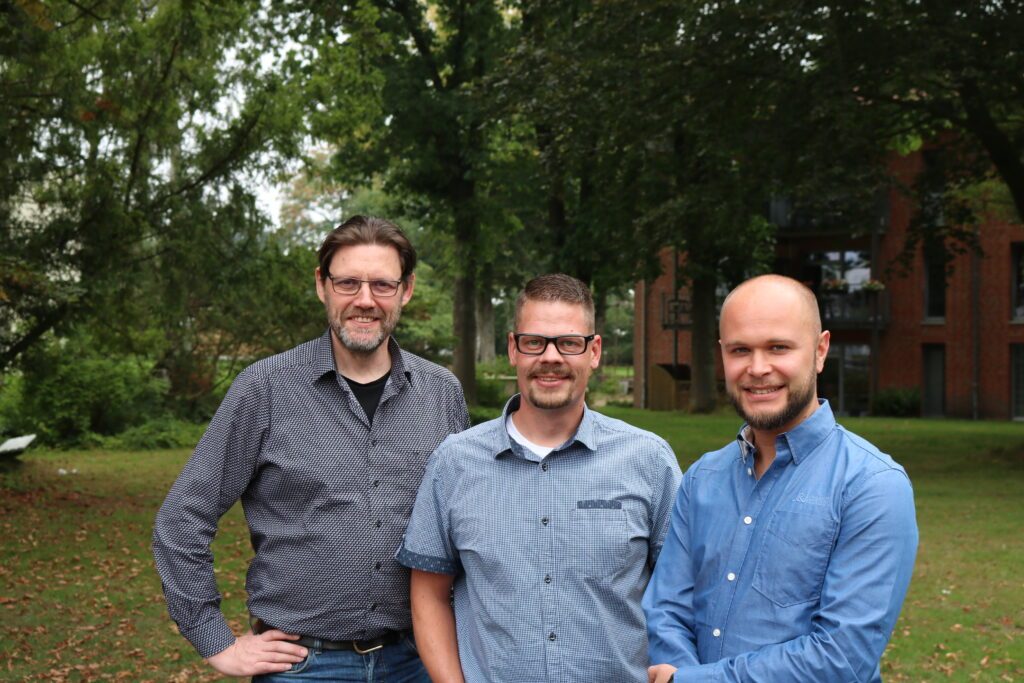
By regularly sending his staff to training sessions at Consulting4IT’s“Academy”in Waldbronn, the IT director does more than just ensure the necessary transfer of knowledge. “It’s quite different when you know your business partners in person rather than just over the phone,” explains system administrator Markus Grehl. “The opportunity to exchange ideas with colleagues from other companies is also worth the trip; we can learn a lot from them.”
“It also creates synergy effects,” adds his colleague Marcel Wantje: “Since you’re already there, you might as well discuss a few other things while you’re at it.” “The catering isn’t half bad either,” the two admins add with broad grins. Consulting4IT makes a point of picking up training participants at the airport or train station with their VIP shuttle and treating them to a meal at a trendy restaurant on the second evening of each training session.
For now, only A-priorities
In addition to software distribution and helpdesk support, Krause’s team has also focused extensively on IT asset management. Here, they utilize not only the standard features of the Matrix42 solution but also a few add-ons that Consulting4IT has developed for its clients. These include, for example, the “Custom Pack Consumables/Small Parts.” This allows for the semi-automated management of items such as mice and USB keyboards, as well as disposable headphones for training participants—in large quantities and without individual inventory numbers. Once the user has defined thresholds, the software automatically reminds them when it’s time to reorder.
At the time, Friedehorst also purchased the Matrix42 modules for license and contract management. The administrators have already attended training sessions on these topics. From an extensive portfolio of 14 Matrix42 training courses alone, the specialists at Consulting4IT offer dedicated three-day training courses: Contract Management Expert, License Management Expert, and Asset Management Expert.
“This is all very interesting and makes a lot of sense,” says the IT director, “which is why we purchased the software and training as a package. With the new Matrix42 release, we’ll also be implementing license and contract management. But right now, due to limited resources, we can only focus on top priorities.”

Service Catalog in Use
The Service Catalog is clearly a matter close to their hearts and thus a top priority. It allows users to order complete packages consisting of hardware (PC, laptop, or mobile device), applications, and services—much like in an online store—at a fixed monthly service price. “This is roughly comparable to a car lease agreement,” says Krause.The Matrix42 “Service Catalog” module lists the available service options along with their respective prices. This gives the requester and their supervisor an immediate overview of the total costs.
An automated approval process saves both parties the hassle of back-and-forth correspondence. Consulting4IT also offers training on designing the service catalog (“Service Catalog Expert”), which Krause made available to his employees. As the IT director knows: “You can’t skimp on the system’s design; otherwise, you’ll run into problems later.” The “Self-Service Portal” for IT services has been in practical use at Friedehorst since the beginning of last year. It is constantly being expanded. The IT team has just completed the SQL database migration to Version 2016 Enterprise Always On.
Customizing packages from the support partner
The catalog solution includes a range of additional features that Consulting4IT offers its customers under the name“Service Catalog plus.”These are custom packs that largely automate specific, frequently used functions; they can be adapted to the customer’s individual circumstances. Krause is fully aware that the software vendor itself cannot handle this detailed work: “On the one hand, they don’t really know exactly how each individual customer wants to use the tool; on the other hand, they certainly don’t have the capacity to create all the specific solutions for every target group. That’s where Platinum Partners like Consulting4IT come in.” Marcel Nyhuis, the sales expert responsible for Friedehorst, adds: “We can focus so intensively on the tools because we’ve specialized in just a few products.”
Of the bundle, which comprises a total of five custom packs, Friedehorst is currently using the “New Employee” and “Reference Role Services” modules. From an IT perspective, the first module maps the process that takes place every time a new workstation needs to be set up—from hardware installation to creating the user account in Active Directory. “Often, IT staff are the last to be notified of a new employee’s arrival,” says Krause. Lean business processes can then accelerate service delivery.
The "Reference Roles Services" Custom Pack is intended for managers and role concept coordinators. Depending on their role within the organization, users are assigned specific “roles,” which determine the required IT equipment and access permissions to directories and data. With the help of the Custom Pack, their supervisors can customize the respective reference role directly in the service portal—particularly useful for the initial setup for new employees or when changing departments.

No dead stock—no tied-up capital
What sets the Friedehorst solution apart is that the software supports not only delivery but also returns. “Users don’t have to commit to a service long-term—in fact, there isn’t even a minimum contract term; they can subscribe or cancel on a monthly basis,” explains Krause. “This provides a whole new level of planning certainty for the operational business units.”
Because the services are only rented and not purchased, users at Friedehorst avoid dead capital in the form of the often-cited “shelfware.” Unnecessary hardware or software licenses are not hoarded—as is usually the case—"just because they’ve been paid for," but can instead be passed on within the organization. The return process ensures that used devices and licenses can be put back into circulation. "Assign Asset From Stock" is the name of the workflow that Consulting4IT developed for this purpose.
Cost transparency across the entire IT department
All in all, Friedehorst already enjoys a high degree of cost transparency in IT—not only for hardware and software, but also for services. However, Krause wants to take it a step further: Service Level Agreements (SLAs) are also to be introduced. This would allow users to actively influence the level of their service costs: Those who manage a critical environment or have special availability requirements for any reason would then have to pay more accordingly. Those for whom a service within two or three days is sufficient would pay less.
This cost-based and performance-based billing for IT services is a medium-term goal that Krause’s team is currently working on. The IT director comments: “This not only ensures greater fairness, but ultimately also encourages cost-conscious behavior.”
Saved at least three people
But the IT team doesn’t have to wait that long to see the benefits of the Matrix42 implementation. The Service Catalog is already paying off. “The ordering processes have become significantly more streamlined and efficient,” Krause noted: “In the past, we used to exchange numerous emails back and forth for every order. Today, the order automatically goes to the respective cost center manager. This ensures that nothing can be ordered without approval, and we receive far fewer procurement requests than before.”
Purchasing the custom packs from our partner Consulting4IT was also a good decision, the IT director continues: “Sure, we could have configured them ourselves with the right expertise. But then the question always comes down to what costs more: the custom pack or our employees’ time.” It’s hard to put a number on the bottom line, says Krause: “But I’d go so far as to say: If we didn’t have the complete package, we’d either need an external service provider or three to five more people today.” By a conservative estimate, the software therefore saves 200,000 to 300,000 euros in personnel costs per year.
Other sectors are following suit
The IT team at Friedehorst has apparently succeeded in getting other departments within the company excited about the solution. A pilot project is already underway to “repurpose” the ordering system. After all, why shouldn’t it also be used in other areas of the company, such as for work supplies, office furniture, or company cars? “An asset is an asset is an asset,” Krause states. And another great success: The foundation’s Controlling department has recently started maintaining the central cost center plan in Matrix42 instead of Excel. “This has nothing but advantages for everyone,” the IT chief says happily: “It eliminates duplicate work in Controlling and IT, and the plan is consistent across the entire organization.”
About the Friedehorst Foundation
In 1947, American and German Christians of the Protestant faith founded the Friedehorst Foundation on the site of a former military barracks near Bremen. Since then, this diaconal institution—operated as a foundation under church law—has provided care and individualized support to approximately 2,000 children, adolescents, and adults each year. Affiliated with the foundation are a high school, an outpatient children’s hospice service, and a private school for geriatric nursing. Friedehorst employs a total of 1,400 people, making it the largest employer in northern Bremen.